19/09/2018
Social media and journalism. So many benefits and so much potential, yet so many liabilities and pitfalls to look out for.
Today saw Jarrod M., Jessica and Monique presenting their views on this topic, all highlighting different aspects.

Image Source: Twitter
One of the questions posed to the class was whether or not citizen journalism and mainstream professional journalism can peacefully coexist, or are we under threat? Personally, this hit a nerve, as there are so many things to consider.
According to Posetti in Tanner & Richardson (2013), social media platforms like Twitter allow images to be posted in real-time by the public, also giving journalists access to images and video material which they wouldn’t have had otherwise.
Platforms like Twitter also give the public the ability to publish journalistic material on their own, without the constraints of deadlines and style preferences that they would if they were working for a publication (Posetti in Tanner & Richardson, 2013).
However, the downside of this is that there is no formal monitoring of the truthfulness and reliability of the material published.
Monique discussed the 2005 London bombings, and the fact that publications had easy access to images and updates from the public (BBC, 2015).
However, another issue which arose was the idea of images and citizen journalism. When is it ethical to publish graphic and distressing images?

Famous images of Kim Phuc. Image Source: CBS News
The class was somewhat divided by this idea. While most could agree that yes, in most cases, images like dead bodies during incidents like 9/11 and the London bombings would be best not published out of respect for the families. However, it was also agreed that distressing images can also bring awareness, such as the image of Kim Phuc during the Vietnam War. However, ethically speaking the idea of taking selfies during times of distress is unacceptable.
After doing some research, I found that a number of people were witnessed taking selfies in front of the Lindt Café in Sydney during the siege in December, 2014. These people have since copped huge backlash on social media (Dow, 2014). Check out the video below!
To sum up this week, I don’t feel, even with all that social media has to offer citizen journalism, that traditional professional journalism is under threat. I feel that, at least for the time being, social media has simply allowed both traditional and citizen journalists to communicate more interactively with their audiences in real time, often even collaborating with each other on stories.
References:
BBC. (2015). 7/7 London bombings: What happened on 7 July 2005?. [online] Available at: https://www.bbc.co.uk/newsround/33401669 [Accessed 19 Sep. 2018].
CBS News. (2015). The girl in the picture. [online] Available at: https://www.cbsnews.com/news/the-girl-in-the-picture/ [Accessed 19 Sep. 2018].
Dow, A. (2014). Martin Place siege: people share selfies and jokes on Twitter. [online] The Sydney Morning Herald. Available at: https://www.smh.com.au/national/nsw/martin-place-siege-people-share-selfies-and-jokes-on-twitter-20141215-127mn4.html [Accessed 19 Sep. 2018].
Tanner, S. and Richardson, N. (2013). Journalism Research and Investigation in a Digital World. South Melbourne, Vic.: Oxford University Press.
10/10/2018
Gender and Race in the Media was the topic for today’s class, and as usual with sensitive topics like this one, the atmosphere was quite intense.
Kieran, Elleni and Olivier were today’s presenters. The three presented on very different aspects of the topic, bringing the class to a stand still at times as the facts were laid bare. First up, Kieran spoke of the depiction of Indigenous Australians in the media. While I was aware that efforts have been made by the likes of NITV to improve things in this area, we still have a long way to go.
Kieran spoke at length about the negative portrayal of Indigenous Australians in the media. According to Meadows in Tanner & Richardson (2013) there is a terrible trend in Australia which sees a distinct lack of focus on the Indigenous culture, their beliefs and way of life, and a fixation on negative aspects such as substance abuse and unemployment. Check out the video below; an interview featuring Hugh Jackman’s opinion of the media portrayal of Indigenous Australians.
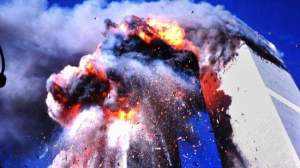
The twin towers of the World Trade Centre on 9/11.
Image Source: Sunshine Coast Daily
Olivia’s presentation on the portrayal of Muslim people in Australia hit a few raw nerves in the class. Different perspectives soon emerged as to whether Muslim people can be considered a “race”. After all, Muslim people are not just Arab, but could belong to any other ethnic group. However, it was agreed that Islamaphobia is a serious issue in western society. There is no denying that events like 9/11, and the Lindt Café siege take a good portion of the blame for the attitude of many Australians towards Muslims, but this doesn’t mean that it is acceptable (Ozalp, 2017).
Elleni’s presentation on sexism, featuring the intense criticism of Julia Gillard as prime minister as her case study, along with Kieran and Olivier’s presentations, brought the class to one conclusion: education is the key. An area of study on the covering of Indigenous, and Muslim affairs somewhere in the Communication degree could see new journalists leaving the university with a better understanding of the Indigenous community.
In the case of Elleni’s presentation, the consensus was that sexism is still a work in progress. While the last fifty years has seen a great shift in our culture, i.e. the acceptance of the LGBTIQ community, the acceptance of Indigenous Australians as citizens, there are still aspects of our culture which, while they need to evolve, aren’t quite there yet.
I sincerely hope that with further education, societal issues like these will improve.
References:
Ozalp, M. (2017). Islamophobia is still raising its ugly head in Australia. [online] The Conversation. Available at: https://theconversation.com/islamophobia-is-still-raising-its-ugly-head-in-australia-80682 [Accessed 10 Oct. 2018].
Tanner, S. and Richardson, N. (2013). Journalism research and investigation in a digital world. South Melbourne, Vic.: Oxford University Press.


I agree. I don’t think that journalism is under threat. However, I do think that the unreliability of the news that is shared on social media by citizen journalists is a threat to the audience, who are consuming this inaccurate news. I discussed the issue in my own blog, and suggest that while the posting of fake news on social media is hard to regulate, it can be controlled through informing individuals how to fact-check, as well as how to recognise whether a story can be trusted or not.
LikeLike
Hi Brett,
I think you’ve done an excellent job in summing up the conclusions we all came to in our presentations on this topic: education is the key. I would also add to this that we as media professionals need to be open-minded and actually be willing to accept new information about different cultural groups, so that we can therefore improve our understanding. The onus is on each individual journalist to do this, so that our media can stop reproducing the biases that harm minority groups on a daily basis.
LikeLike
I find your discussion on whether citizen journalists should or should not post distressing photos as a good starting point. I think we should also realise how the videos and photos recorded by citizen journalists can actually aid journalists. A great example is the chemical bombing of a multistory building in Douma. Scientist and New York Times journalists analysed dozens of videos and photos which led to them piecing the events of the bombing. The evidence led the journalists to believe that Syrian President Bashar al-Assad most likely gassed his own people, or at the very least contradict his side of the story. The photos and videos themselves were recordings of people (including) children lying dead. While these images are distressing it has helped journalists discover what happened. Heres a link to the story https://www.nytimes.com/interactive/2018/06/25/world/middleeast/syria-chemical-attack-douma.html
LikeLike